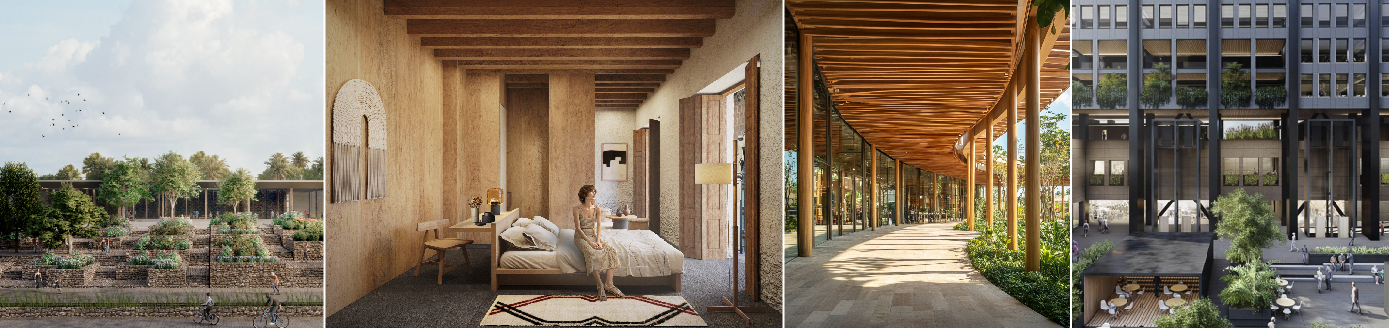
Architecture 2026: The Trends Redefining Design
Architecture heading toward 2026 is no longer understood solely through form or image. According to current discussions and publications in specialized media such as ArchDaily, Dezeen, and Architectural Digest, the focus of design has shifted toward the environmental, social, and human impact of built spaces. In this context, a series of clear trends are shaping the future of the discipline.
1. Regenerative sustainability
Sustainability is evolving toward a more ambitious approach. Architecture moves beyond merely reducing negative impacts and begins to design buildings capable of generating energy, improving their surroundings, and operating more efficiently over time. Low-impact materials, passive strategies, and integrated climate solutions become the foundation of design.
2. Circular design and material economy
Specialized publications highlight an architecture conceived through its entire life cycle. Buildings are designed to be adaptable, disassemblable, and reusable, prioritizing recycled and local materials or those with a lower carbon footprint, while reducing waste from the design stage onward.
3. Integration of technology and artificial intelligence
Technology ceases to be a visible feature and becomes a strategic tool. Data analysis allows designers to anticipate the energy, environmental, and functional performance of buildings, resulting in architecture that is more precise, efficient, and adaptable.
4. Human-centered architecture and well-being
Design places people back at the center through biophilic architecture. Natural light, ventilation, acoustic control, and the presence of nature are consciously integrated to enhance users’ physical and emotional health. Spatial experience becomes a key indicator of architectural quality.
5. Adaptive reuse of existing buildings
In response to urban sprawl and overconstruction, the transformation of existing structures gains momentum. Adaptive reuse preserves urban and cultural value, reduces environmental impact, and responds more efficiently to new programmatic needs.
6. Flexibility and adaptability of spaces
Architecture in 2026 understands change as a constant. Spaces are designed to evolve over time, adapting to different uses, scales, and ways of living, extending their lifespan and increasing their long-term value.
7. Local identity and sense of place
Experts agree on moving away from generic architecture. The use of regional materials, local construction techniques, and solutions specific to climate and culture is increasingly valued, reinforcing the identity and character of each project.
8. Warm and sensory aesthetics
Rigid minimalism gives way to a more human approach. Textures, natural tones, and organic forms create spaces that feel inhabitable, approachable, and emotionally connected to their users.
9. Architecture as an urban and social tool
Finally, architecture is understood as part of a larger system. Projects incorporate their relationship with public space, mobility, community, and inclusion, assuming an active role in shaping more livable cities.
Together, these trends show that architecture toward 2026 is no longer defined by styles, but by its ability to respond to context, anticipate the future, and generate positive impact. A discipline evolving from form to strategy, and from object to experience.