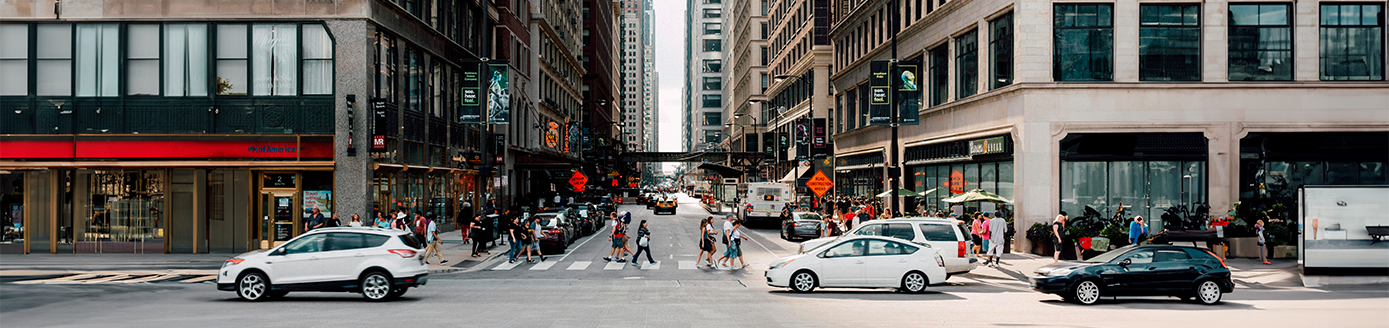
The Pedestrian as the Starting Point of Urban Design
In contemporary architectural and urban practice, designing the city means taking a critical stance toward models that have historically prioritized vehicular infrastructure over human experience. Today, the true value of urban space is no longer measured solely by its capacity for movement, but by the quality of life it offers to those who inhabit and move through it.
Thinking about the city from the pedestrian’s perspective transforms the way we design. When human experience guides urban design, spaces become more efficient, livable, and valuable over the long term.
Designing at the pedestrian scale means understanding the city as a sequence of experiences. Every route, every pause, and every encounter becomes part of a spatial narrative that must be carefully considered. From this perspective, architecture is not conceived as an isolated object, but as an element that builds urban continuity, activates public space, and engages in dialogue with its immediate context.
A pedestrian-oriented city promotes proximity between uses, environmental legibility, and the creation of intermediate spaces that invite people to stay. Generous sidewalks, clear transitions between public and private realms, shade, vegetation, and honest materials become design tools as essential as massing or structure. These elements not only enhance everyday experience, but also strengthen the identity of place.
From an environmental and social standpoint, prioritizing the pedestrian is a strategic decision. Reducing dependence on the automobile allows urban surface to be reclaimed for collective uses, improves air quality, and encourages healthier lifestyles. At the same time, walkable environments foster social interaction, inclusion, and a sense of belonging key components in the formation of resilient urban communities.
In terms of urban value, projects rooted in human experience demonstrate a greater capacity for longevity. They are environments that adapt, age with dignity, and maintain their relevance amid economic and social change. For an architecture firm, this approach represents a responsible way of practicing design: creating spaces that not only respond to immediate needs, but also contribute lasting value to the urban fabric.
To think of the city from the pedestrian’s perspective is, ultimately, to reaffirm that architecture has a direct impact on everyday life. It is to acknowledge that every design decision influences how people move, meet, and inhabit the city. Under this premise, urban design becomes a transformative tool one in which human experience stands at the very core of the project.