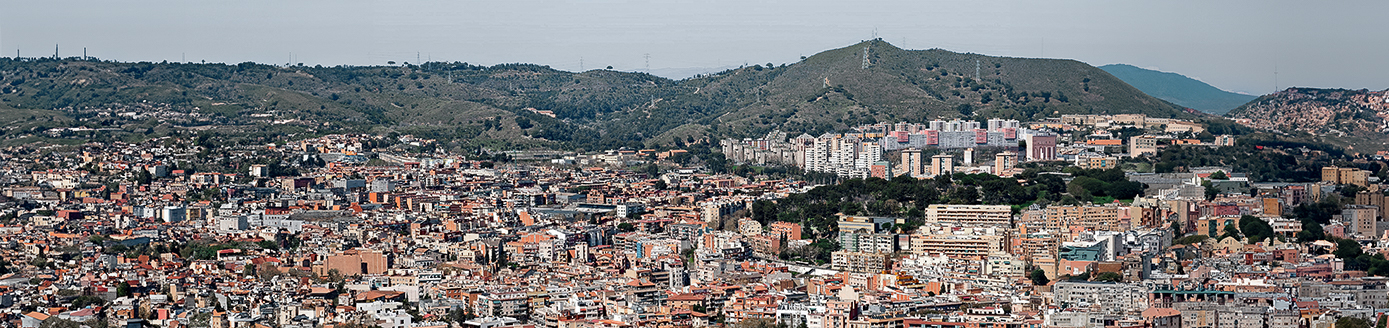
Is It Sustainable to Keep Building Housing on the Periphery?
For decades, cities have expanded toward their edges as an apparently logical response to housing demand. In the short term, building on the periphery can seem more affordable: land is cheaper, plots are larger, and regulations are often less restrictive. However, when examined over the medium and long term, this strategy raises important questions about its economic, environmental, and social viability.
Expanding the city means extending infrastructure to areas where it previously did not exist: new water and sewage networks, electricity, street lighting, paving, and public transportation. Every additional kilometer represents a significant investment for governments and developers, as well as higher maintenance costs over time. What initially appears to be savings in land value ultimately translates into a more expensive and less efficient urban operation.
Moreover, dispersed growth increases dependence on the automobile. When housing is located far from workplaces, commercial areas, and services, people must travel longer distances every day. This not only affects household transportation expenses, but also reduces the time available for personal and community life. Longer commutes mean fewer hours for rest, less social interaction, and higher stress levels. At the urban scale, they also lead to greater emissions and traffic congestion.
By contrast, densifying consolidated areas offers a more sustainable alternative. Investing in neighborhoods that already have infrastructure, amenities, and connectivity allows cities to optimize existing resources and reduce the need for further expansion. Well-planned densification is not simply about building more, but about building better: integrating housing with commerce, services, and quality public spaces to create more walkable, active, and safer environments.
Strengthening established neighborhoods also helps revitalize local economies and unlock the potential of the city that already exists. From an environmental perspective, concentrating growth reduces the urban footprint and promotes more efficient forms of mobility, such as public transportation, cycling, and walking.
The question is not whether cities should grow, but how they should grow. In the face of current challenges, climate change, pressure on resources, and unequal access to opportunities, continuing to expand the urban footprint toward the periphery appears increasingly unsustainable. Rethinking growth through strategic densification and urban regeneration emerges as a more responsible and viable path for the future of our cities.